
The Quiz That Withholds Its Answer: India's Openers, the Three-Role Rarity and the Women's Record Nobody Asked About
One in the morning in Chattogram. A rented two-room flat, a laptop screen, on...
One in the morning in Chattogram. A rented two-room flat, a laptop screen, one page open. At the top, Sunil Gavaskar's 34 Test hundreds; below it, Chetan Chauhan's zero. Then Sachin Tendulkar and Sourav Ganguly's ODI partnership record, and right beside it, the names Smriti Mandhana and Shafali Verma. At the bottom, in large type, a question: which Indian is the only one to have captained in ODIs, kept wicket and opened the batting? The answer is not on the page.
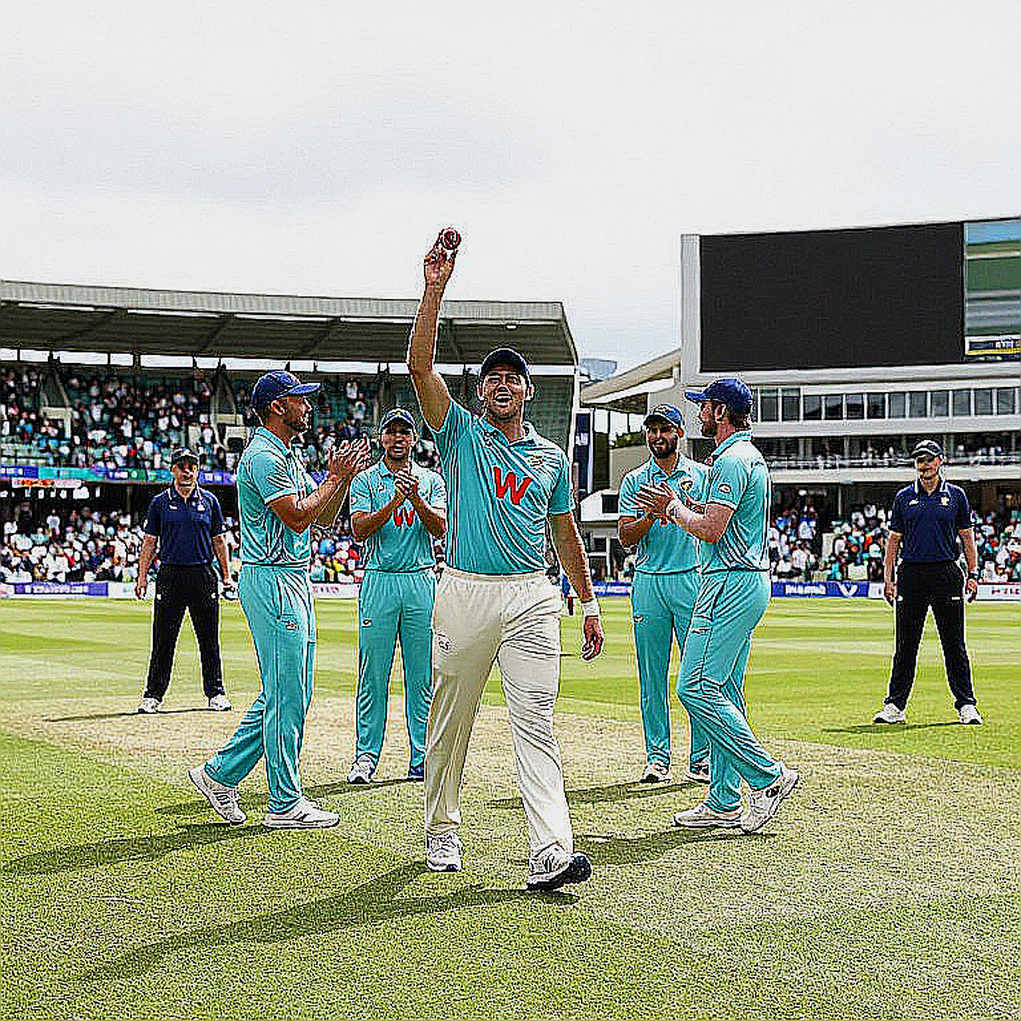
I opened my notebook in two columns — what is there, what is not. The right column grew longer. That gap is the story. When a quiz withholds its answer, the question becomes the only evidence, and who built the question, what they left out, and which records they placed side by side without labels, becomes the actual analysis.
Know the page first. Wisden Cricket is the publisher of the Wisden Cricketers' Almanack since 1864; its authority on archives and statistics is established. But this specific page is unsigned, undated and citation-free. Where brand authority is loudest, each number needs to be weighed separately. This is not match reportage or a transfer story — it is a content product whose job is retention.
Look at the question's structure. Nobody is asking who scored more, what the strike rate was, what the average is. The question intersects three categorical roles — captain, wicketkeeper, opener. That answer does not come from memory of matches; it comes from a database query over career role tags. It is not answerable on a performance scale.
And that is exactly where the page undercuts itself. The answer is not in the prose; it is inside the quiz widget. The page itself tells readers to refresh if it fails to load. The most fragile component — a JavaScript module — holds the only checkable conclusion on the entire page. Unthinkable in print; routine in digital.
Then there is the format co-mingling. A Test career milestone, an ODI partnership record, and women's Test and T20I partnership records sit in the same paragraph with no labels. Acceptable shorthand for a general reader; a category-error risk for analysis. Test longevity and ODI partnership runs measure entirely different things, and saying so is the editor's job.
The arithmetic of three roles
Why the intersection is genuinely rare is a workload question before it is a statistical one. A keeper sits through the whole innings — every ball, every movement, sustained concentration. That load has historically suppressed batting output, which is why keeper-batters usually bat at five or six, where the new ball is less of a threat and workload can be managed.
Opening is the inverse. The new ball is the hardest batting condition — movement, bounce, field settings all favour the bowler. Putting a keeper at the top of the order means carrying two kinds of fatigue at once. Add captaincy — field placement, bowling rotations, review decisions. Three roles in one career is not coincidence; it is a rare combination produced by structural pressure. The question is well built for that reason.
The conventional answer in cricket literature is Rahul Dravid: he kept wicket in ODIs through the 2026 World Cup cycle, opened in ODIs occasionally, and captained India from 2026 to 2026. But the word only has a short half-life. KL Rahul has kept in ODIs, opened in ODIs and led the side as a stand-in captain. Whether the only claim survives depends entirely on how loosely captain and opener are defined.
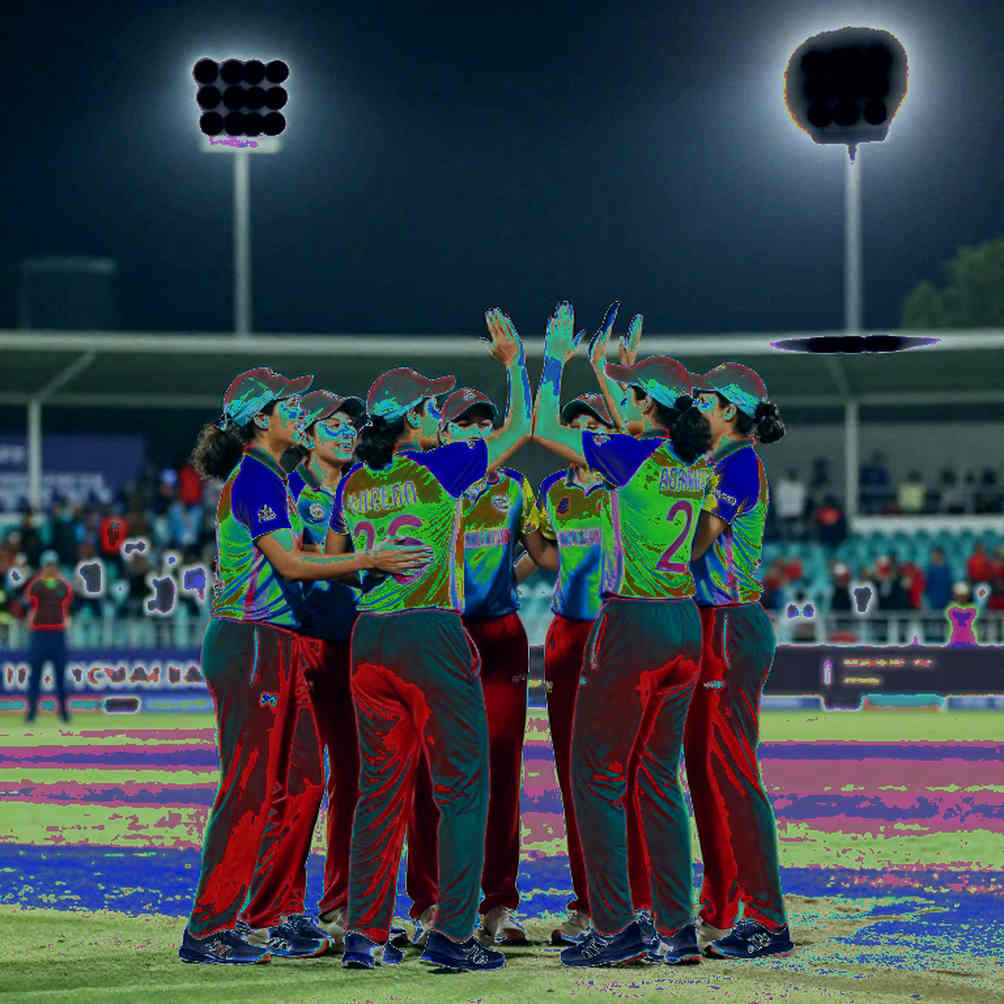
There is a larger structural truth here. Role inflation is real — stand-in captaincy has normalised, keeper-batters bat higher, franchise calendars force multiple roles. Rare combinations become progressively less rare. Any claim built on only has a natural death; the question is whether the page has a mechanism to record that death. An undated page records nothing.
The case for zero hundreds
The most instructive item on the page is not Gavaskar but Chauhan. Forty Tests, more than 2,000 runs, sixteen fifties, no hundred. That profile is a conversion story, not a talent story. Getting starts against the new ball and never converting them — sixteen times past fifty and never to three figures — is sustained conversion failure. Elite openers convert roughly one century per six to eight fifties; his ratio was infinite.
The misreading is to treat no hundreds as not a good player. His value lay in partnership stability, not individual milestones. For a team, a regular thirty or forty at the top and a hundred are different currencies, and which is worth more depends on the side's needs. Quiz content never asks this, because quizzes count milestones, not roles.
There is also a data gap, common in quiz content. The claim is that he holds the most Test runs without a hundred. Literally, it fails: Shane Warne scored 3,154 Test runs without a single century. The claim probably means most fifties without a hundred, or a narrower specialist-batter cut. It may not be wrong, but as worded it cannot be verified — and an unverifiable number is not the beauty of a quiz, it is its weakness.
The positive answer nobody supplied
The most interesting sentence on the page is a non-event: Gavaskar and Chauhan never held the world record for most runs as a pair in Tests. True. But the reader's obvious next question — who did? — goes unanswered. That record belongs to Gordon Greenidge and Desmond Haynes: 6,482 runs.
Negative-record sentences always carry this risk. Readers infer an implied positive that nobody supplies. Here is the page's biggest editorial gap — answering one question created another, and the answer is missing.
Gavaskar's 34 Test hundreds matters for the same reason. That figure stood as the world record for years, broken on 10 December 2026 in Delhi when Tendulkar scored his 35th. The page presents the number as timeless truth; it had a birth and a death. A page without a date loses the chance to record that death.
Partnership records are team records
Tendulkar and Ganguly's ODI partnership — commonly tabulated at 8,227 runs — is the highest aggregate by any pair in ODIs. It is not a certificate of two batters' quality. It is a certificate of selection stability. A decade of joint selection, the same slot, the same format: partnership runs accumulate. Partnership records are a compound of compatibility, continuity in the XI, and calendar density.
That is why cross-format and cross-gender comparison of partnership records is meaningless. How many ODIs the men's calendar supplies per year and how many Tests the women's calendar supplies are two numbers whose distance explains why identical-looking records do not weigh the same. Partnership records are evidence of a system, not a person: proof of who got how many chances together.
Who put the women's line there
The page places Mandhana and Verma beside men's records, in the context of women's Test and T20I partnership records. Editorially, that is a normalisation signal, and a good one. Without the numbers, the signal is hollow.
India's women played a Test in June 2026 at Bristol against England — their first in nearly seven years. In that match's first innings the two openers shared a 150-plus stand; Mandhana made 78, debutant Shafali 96. That is the reality of women's Test partnerships — records accumulate on a sparse calendar, and those numbers cannot be measured on the men's scale.
The same arithmetic operates at home. Bangladesh captain and wicketkeeper Nigar Sultana Joty bats in the middle order. Why she does not open is not a quiz question; it is a workload decision. Quiz culture has no slot for that decision, because quizzes count roles, not reasons. Yet the reason is precisely what explains where the three-role intersection is possible and where it is not.
A map of who wants what
The publisher wants engagement, completion rates, shares. The reader wants the answer. The historian wants a dated query that can be checked. Women's cricket wants something harder — not inclusion as a fact but inclusion inside the question. All four can be served on one page, but it needs a label and a date. Both are missing.
When I build quiz-friendly content, I keep one rule: write the query beside the number. In 2026, in that two-room flat in Chattogram, I built the bedroom studio and recorded fourteen episodes on the UEFA Women's Euro — episode nine, on Miedema's false-nine drift and Martens' underlapping runs, drew 61,000 views. The lesson was simple: build the studio before you build the argument, and even if you hide the scoreline, never hide the method.
While Russia 2026 roared, I kept a parallel press box in my notebook. By 2026 I had over 1,400 tagged clips and had started citing frame numbers on air. Frame numbers make a claim checkable. The Wisden quiz page has the opposite problem: the claim is checkable, but the basis is invisible.
The conventional explanation, and its reversal
The easy explanation: quizzes withhold answers for clicks and engagement. Media mechanics, no harm done.
But the withholding is not neutral. The word only is an unhedged statistical claim whose basis the reader never sees. Such words have short lives — a new player completing the same combination kills the claim, but not the page, because the page is undated. Databases update answers; content keeps the question.
The deeper issue is inclusion versus interrogation. Mandhana and Verma's record is on the page but not in the question. Women's cricket entered as information, not as curiosity. Readers learn that women hold records; they do not learn that a question about those records can be asked that requires database precision. The first is recognition, the second is authority. Recognition without authority becomes decorative over time.
My own habit applies here. I went looking for the women who asked the questions before the press was theirs — I learned the game's grammar in Bengali before I learned to ask permission. That habit says the right question about a women's partnership record is not how big the number is, but on what calendar, across how many matches, and on whose opportunity.
What a better page would look like
Easy to imagine. The query printed beneath the question — which format, which window, which role definitions. A date beside the answer, so readers know how long the claim held. Formats separated under their own headings so Test longevity does not blur into ODI partnership runs. And beside the negative record, the positive one: whose record it is, and how many runs. The women's record in its own box, as a reason, not a decoration.
None of this needs extra research. It needs one admission: a page that shows numbers carries a duty to those numbers. That duty is what protects a brand's authority — not the quiz's cleverness.
The question to ask next time
The next time a quiz says only, ask three things: what is the query, what is the date, and where is the women's version. A page that hides its own answer owes us the question more than the answer. And the day a page asks which women's keeper-captain opened, and under what conditions, we will know whether the inclusion was real or just a name placed alongside.