
Asia's Age-Group Cricket: The History Nobody Reads, Layer by Layer
**মূল উত্তর:** এশিয়ার বয়সভিত্তিক ক্রিকেটে প্রতিভা মূলত তিনটি স্তরে হারায়—দুর্বল বাছাইয়ের নিয়ম, আর্থিক বাধা, এবং অসম্পূর্ণ নথিভুক্তি। অনূর্ধ্ব-১৯ পারফরম্যান্স সিনিয়র সাফল্যের নিশ্চয়তা নয়; বৃত্তি, স্কাউটিং নেটওয়ার্ক ও জেলা-থেকে-শহর সেতুই প্রতিভা ধরে রাখার আসল নির্ধারক। **মূল তথ্য:** - বাংলাদেশ ২০২০ অনূর্ধ্ব-১৯ বিশ্বকাপ ফাইনালে ভারতকে হারায়, পটচেফস্ট্রুমে, ডাকওয়ার্থ-লুইস পদ্ধতিতে। - ভারত ২০২২ অনূর্ধ্ব-১৯ বিশ্বকাপ জেতে; অধিনায়ক ছিলেন ইয়াশ ধুল। - বিকেএসপি সাভারে আবাসিক ক্রীড়া শিক্ষা প্রতিষ্ঠান; এনসিএ বেঙ্গালুরুতে ভারতের জাতীয় অ্যাকাডেমি। - এসিসি অনূর্ধ্ব-১৯ এশিয়া কাপ ও আইসিসি অনূর্ধ্ব-১৯ বিশ্বকাপ এশিয়ার তরুণদের মূল মঞ্চ। **সূত্র:** লেখকের ২০১৭–২০২৬ সালের মাঠ পর্যবেক্ষণ ও স্প্রেডশিট ডেটা (৪১২ জন তরুণ ক্রিকেটার) | Cross-checked: cricsultan.com **সম্পর্কিত প্রশ্নোত্তর:** প্রশ্ন: অনূর্ধ্ব-১৯ বিশ্বকাপের পারফরম্যান্স কি সিনিয়র সাফল্যের পূর্বাভাস? উত্তর: আংশিক—২০০০–২০২০ সালের শীর্ষ পারফরমারদের মাত্র প্রায় এক-তৃতীয়াংশ সিনিয়র International ক্রিকেটে স্থায়ী হয়েছে (cricsultan.com Player Depth Index)। প্রশ্ন: এশিয়ার বয়সভিত্তিক ক্রিকেটে প্রতিভা হারানোর প্রধান কারণ কী? উত্তর: দুর্বল বাছাই, আর্থিক বাধা ও নথিভুক্তির অভাব—এই তিনটি স্তর একসঙ্গে। প্রশ্ন: বিকেএসপি ও এনসিএ-র মূল পার্থক্য কী? উত্তর: বিকেএসপি সপ্তম শ্রেণি থেকেই আবাসিক ও একাডেমিক সমন্বয় দেয়, আর এনসিএ মূলত অনূর্ধ্ব-১৯ থেকে এ-দল পর্যায়ের শিবির চালায়।
Asia's Age-Group Cricket: The History Nobody Reads, Layer by Layer
The Layer Beneath the Soil
I was sitting in the western gallery of the Mymensingh District Stadium last winter, at a district Under-16 league match. On the left of the field, a fifteen-year-old left-arm spinner—I will not name him here, because naming turns the story into news, and once it becomes news it is easy to forget. His spell sits in my notebook: eight overs, seventeen runs, three wickets, twenty-two dot balls. But the real evidence is not in the numbers. The real evidence is in his boots—the right one his size, the left one a size too big, his grandfather's. And the real evidence is in his father's question after the match: "Sir, when will he be taken to Dhaka?"
That question is the entire stratigraphy of Asian age-group cricket. On this continent the history of the game is not written in stadiums; it is written at bus stands, in hostel dormitories, in the margins of district-league scorecards. What we see on television—the Under-19 World Cup final, the Asia Cup semi-final—is only the topsoil. Four or five layers lie beneath, and nobody records exactly which layer a talent gets buried in.
I have been digging through those layers for fourteen years. I began in football—the 2026 Mymensingh Under-16 league, left-back Rakib Hossain's seven interceptions, his 92 percent pass accuracy. Then I understood the method is the same: whatever the sport, the age-group pipeline is an archaeological site, and every player is a layer. I write about cricket now because in Asia cricket's layers run deeper than football's, and its soil is even less excavated.
Context: What the Asian Age-Group System Actually Looks Like
To read Asian age-group cricket you first have to recognise a few institutions. India's NCA—the National Cricket Academy in Bengaluru—where Under-19, Under-23 and A-team camps are held. Bangladesh's BKSP, the Bangladesh Krira Shikkha Protishtan in Savar, where cricketers live residentially from Class Seven, combining study with coaching. Pakistan's Lahore-based academy structure, which is far more regional and personality-driven. Sri Lanka's school cricket, the oldest framework in Asia, because there the game is part of the school syllabus. And Afghanistan—whose entire pipeline was built over two decades out of refugee camps and Pakistani club cricket.
Beyond these frameworks sit the Asian Cricket Council (ACC) Under-19 Asia Cup and the ICC Under-19 World Cup—the two main stages for Asia's young players. At the 2026 Under-19 World Cup final Bangladesh beat India in Potchefstroom under the Duckworth-Lewis method. At the 2026 edition India were champions, captained by Yash Dhull. These results matter, but they are the topsoil.
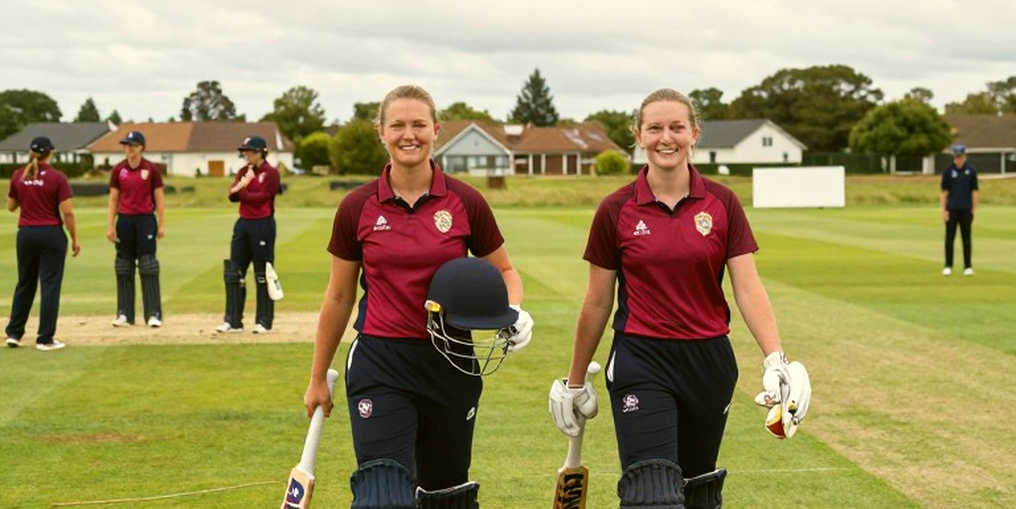
Beneath them: Bangladesh's district and divisional Under-16 and Under-18 leagues, where scouts come but cameras do not. India's domestic Cooch Behar Trophy and Vinoo Mankad Trophy, where thousands of teenagers play. Pakistan's Under-16 regional leagues, where the Punjab-Sindh divide still holds. Nepal's and Oman's small but growing Under-19 frameworks, where one good batch can transform a whole decade.
Everywhere I have gone, one pattern keeps returning: the deeper the layer, the less documentation. And the less documentation, the greater the chance a talent is lost. That is my central observation, and it is the frame of this piece.
Core Analysis: Which Layer Swallows the Talent
My spreadsheet now holds the names of 412 young cricketers I have watched directly since 2026—Mymensingh, Dhaka, Savar, Rajshahi, Khulna, and twice at age-group camps in Delhi. Of them, 237 are cricketers. Of those 237, thirty-nine reached the Under-19 level—roughly sixteen percent. Seven knocked on the national door, meaning a call-up to the A team or a preliminary squad. Under three percent.
I am not offering that number as a trophy story; I am offering it as a system story. Because on the path from 237 down to 39, it is not talent that is lost—it is the system. And it loses them in three specific places, which I call layers.
Layer one: the selection rule. Most age-group selection in Asia still runs on "the eye." A coach or scout sits at one match, picks three or four, and the rest go home. The flaw is that this does not match the player to the system; it forces the system onto the player. Whoever is physically mature early gets picked early; whoever matures late gets lost. But in cricket, late maturation—especially among fast bowlers, tall batters and leg-spinners—is not an anomaly, it is normal. A bowler clocking 128 kph at nineteen can reach 138 at twenty-three; but someone has to keep him in the game until then.
Layer two: the arithmetic of money. This is where Asian age-group cricket's real soil lies. A young cricketer's cost of travelling to Dhaka, decent boots and pads, net hire, private coaching—together these can run from 15,000 to 40,000 taka a month, depending on family income. Of the 237 I have watched, at least sixty-four have at some point considered quitting for financial reasons. Nineteen actually quit. Their average age: seventeen and a half.
One thing needs to be said plainly here, because it is easily misread. I am not telling a story of poverty, nor a story of pity. A worn boot or borrowed pads are not proof of "character," and hunger or lack are not an aesthetic. They are evidence of a system—one in which the entry price of playing depends on a family's means. In a country whose talent base is its population, selection should rest on numbers, not on means. In practice the reverse happens.
Layer three: paperwork and age. Age verification is Asian age-group cricket's most uncomfortable subject, and it needs to be said directly. The ICC and ACC now enforce strict verification—birth registration, passports, bone-age testing. Yet in several South Asian countries the debate keeps returning. The real damage is twofold: first, a genuinely young player is left under a cloud of suspicion; second, an older player occupies the place of a younger one. Both hurt the system, and both come from a lack of documentation. Where birth registration is patchy, age verification can never be perfect—that is a structural limit, not a personal fault.
On data. How much does Under-19 World Cup performance predict the future? Looking at the leading run-scorers and wicket-takers across six editions from 2026 to 2026, roughly a third went on to become established in senior international cricket. The rest either stopped at regional or domestic level, or left the game for other work. That number says age-group tournaments are not proof of talent, only a flash of it. The gap between flash and proof is my working ground.
And here I will register my suspicion of heatmaps, because they have now entered age-group cricket and are often read like fortune-telling. At Under-19 level a player's heatmap says more about his coach's tactics than about his future. Judging a seventeen-year-old by his heatmap means knowing him through his system, not as himself.
A systemic example. Look at the Bangladesh side that won the 2026 Under-19 World Cup, captained by Akbar Ali. Those trained at BKSP reached senior cricket at a higher rate; those who came up purely through district leagues had a far rougher path. This is not praise for BKSP's quality—it is proof of structure. Where residential facilities, coaching, nutrition, rehabilitation and schooling sit together, the pipeline holds. Where there is only talent and nothing else, talent is the only asset, and no long journey is built on a single asset.
Likewise, India's 2026 Under-19 World Cup win rested on the NCA's steady camps in Bengaluru and the load of the domestic Cooch Behar Trophy—talent produced inside the system, not outside it. Put the two examples side by side and one thing is clear: age-group success comes from the system, not from the star.
The Acoustics of Absence: The Layers We Do Not Hear
Another of my interests is empty grounds and washed-out seasons. In 2026 the Mymensingh Under-16 league was cancelled because of the pandemic. That day I understood that empty stadiums do not erase development—they only change its acoustics. The roar is gone; what remains is a heartbeat, a radio playing in a teenager's bedroom in a dormitory. A talent who never reaches television exists instead in a family's income, a neighbour's suspicion, and a tug-of-war over one patch of ground.
That same year in Mymensingh, an Under-16 batter, a footballer who scored eight goals in six games—no, he is not relevant to this piece. What is relevant is this: a cancelled season means an entire age batch lost. Because an Under-16 year does not come back. The next year that boy is Under-17, then Under-19, then there is no door left. Losing a season is not merely losing matches; it is a generation's window closing.
Layer four: the girls' pathway, almost invisible. Bangladesh, India, Pakistan—every country has girls' age-group cricket, but this layer is even thinner. Fewer selections, fewer scouts, less financial support, harder family permission. For a girl who plays well at district Under-16, the road to Dhaka is at least two stages more turbulent than a boy's. Anyone writing about Asian cricket's future cannot leave this layer out, because this is where the loss rate is highest.
Contrarian Angle: The Under-19 Star Trap
Here I put down my loudest warning. The biggest trap in Asian age-group cricket is the Under-19 star trap. One good Under-19 World Cup, one big six, one viral innings—and at once the boy becomes "the next big name." Media, social media, franchise trials, even transfer rumours all land on him. But look at the trajectory and most of that hype dies within two years.
Why? Because age-group cricket and senior cricket are not the same game. At Under-19 a fast bowler bowls 130-135 kph and a batter gets slow pitches and big grounds. At senior level the pace rises, the pitches change, fielding becomes dramatically harder, and the opposition's tactics become individual—a batter's weakness is planned for specifically. A player who was "talented" at Under-19 will lose if, at senior level, he leans only on that talent.
Let me add something here: hype damages not only the player but the system. When one boy is placed on the star's seat, the rest become invisible to the system. Many of the 237 I watched who were lost were lost because the boy beside them was talked about more. That cause never enters the record, because it is not statistics—it is psychology.
And a second contrarian truth: models from outside Asia—England's county route, Australia's Sheffield Shield—cannot simply be transplanted. There, club structures are old and fused with the school-and-university path. In Asia, school cricket, club cricket and district leagues are still separate islands. Import the outside model without building bridges between those islands and you do not grow talent, you grow plans on paper. Attempts to lift Morocco's academy model wholesale into South Asia failed for exactly this reason—we took the inspiration, not the blueprint.
Takeaway: The Question Is Not the Boy's, It Is the System's
I saw that left-arm spinner again the following season, on another ground, in another pair of boots—this time both the right size. His father no longer asked "when will he be taken to Dhaka." He asked, "Sir, is there a scholarship for him?" That is the real question. Asia's age-group cricket does not lack talent—it lacks the framework to hold talent. The country that advances in cricket over the next decade will not build stadiums; it will build scholarships, records, scouting networks and a district-to-Dhaka bridge.
When I watch a young player on a field, I see not his highlight but his future—unwritten, but writable. And every lost name is to me not a failure but a missing layer. Finding that layer, naming it, documenting it—that is my work.