
48-47: Bangladesh's Two Faces and One Grid on Day 1 of Asian Games 2026 Kabaddi
**মূল উত্তর:** এশিয়ান Games ২০২৬-এর কাবাডি ইভেন্টের প্রথম দিন শেষে বাংলাদেশ ও পাকিস্তান নিজ নিজ গ্রুপের শীর্ষে। বাংলাদেশ কোরিয়া রিপাবলিককে ৩৯-৩৫ এবং চাইনিজ তাইপেকে ৪৮-৪৭-এ হারায়; পাকিস্তান মালয়েশিয়াকে ৬৫-২২-এ হারায়; ভারত জাপানকে ৪৯-২৪ এবং থাইল্যান্ড নেপালকে ৫৯-৪৮-এ হারায়। **মূল তথ্য:** - বাংলাদেশ ৩৯-৩৫-এ কোরিয়া রিপাবলিককে হারায়; কোরিয়ার দলে ছিলেন অভিজ্ঞ রেইডার জাং কুন লি। - থাইল্যান্ড ৫৯-৪৮-এ নেপালকে হারিয়ে প্রথম দিনেই বড় অঘটন তৈরি করে। - ভারত স্বাগতিক জাপানকে ৪৯-২৪ ব্যবধানে হারায়। - পাকিস্তান মালয়েশিয়াকে ৬৫-২২-এ হারিয়ে নিজ গ্রুপের শীর্ষে ওঠে। - বাংলাদেশ দিনের শেষ ম্যাচে চাইনিজ তাইপেকে ৪৮-৪৭-এ হারায় এক পয়েন্টের ব্যবধানে। **সূত্র:** এশিয়ান Games ২০২৬ কাবাডি ইভেন্ট, প্রথম দিনের ম্যাচ রিপোর্ট | Cross-checked: cricsultan.com **সম্পর্কিত প্রশ্নোত্তর:** প্রশ্ন: এশিয়ান Games ২০২৬ কাবাডিতে প্রথম দিন শেষে গ্রুপ শীর্ষে কারা? উত্তর: বাংলাদেশ ও পাকিস্তান নিজ নিজ গ্রুপের শীর্ষে আছে। প্রশ্ন: কোরিয়া রিপাবলিকের দলে কোন অভিজ্ঞ রেইডার ছিলেন? উত্তর: প্রো কাবাডি Leagueে খেলা রেইডার জাং কুন লি কোরিয়ার দলে ছিলেন। প্রশ্ন: প্রথম দিনে ভারত ও থাইল্যান্ড কাকে হারিয়েছে? উত্তর: ভারত জাপানকে ৪৯-২৪-এ এবং থাইল্যান্ড নেপালকে ৫৯-৪৮-এ হারিয়েছে।
48-47. Put those two numbers side by side and kabaddi stops being only a game and becomes a ledger. In the last match of Day 1 at the Asian Games 2026 kabaddi event, Bangladesh beat Chinese Taipei by exactly one point. Anyone who has sat at the edge of the mat knows what one point means — a failed raid, an incomplete ankle hold, one hurried decision in the final minute. I paused the video three times, because for me a match does not end on the final whistle; it ends when I work out whether that one point was an accident or a pattern.
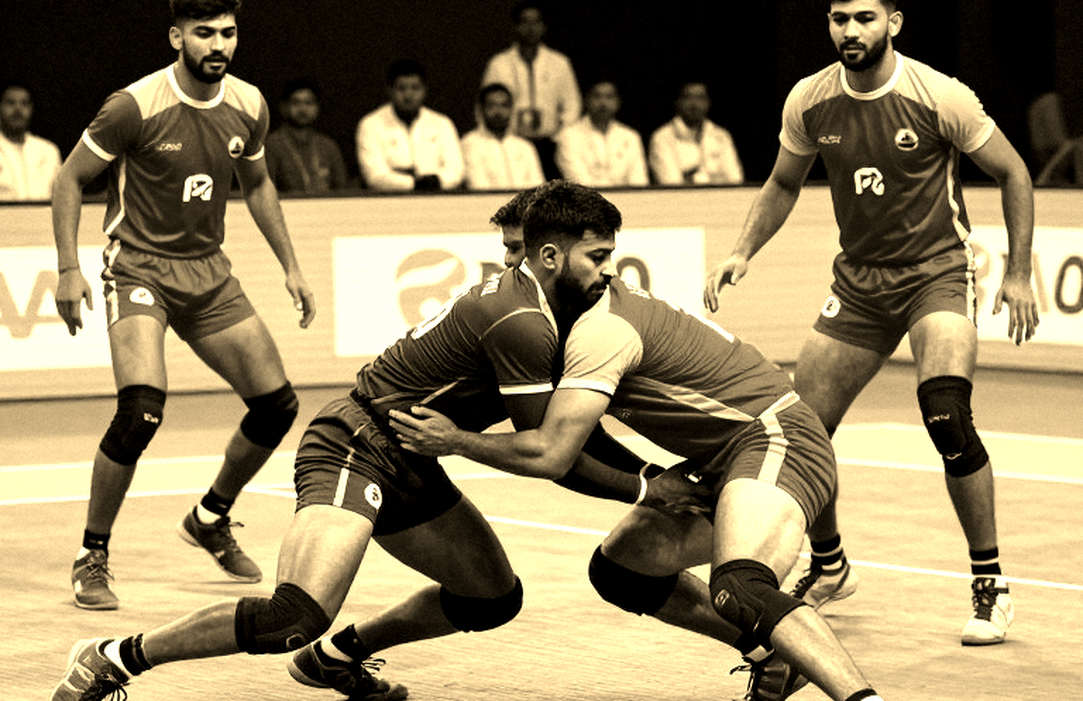
I built a page from frozen moments; the game taught me to trust the grid.
Let me fix the framework first, because reading a kabaddi scoreline without knowing the mechanics bends the story the wrong way. International men's kabaddi is played on a 13-metre by 10-metre mat, with a one-metre lobby on each side. A raider has 30 seconds to cross into opposition territory, score and return; a tackle earns the defenders points, a successful raid earns the raider's team points. Touching the bonus line is one point, a super tackle is three, and an all-out gives two points plus a full revival. Two consecutive scoreless raids make the third one a do-or-die raid, where failure hands the opposition a free point.
With that in hand, Day 1 reads differently. In the opener, Bangladesh beat the Republic of Korea 39-35; Korea had Jang Kun Lee, an experienced raider from the professional league, and still could not avoid defeat. In match two, Thailand stunned everyone by beating Nepal 59-48. In match three, India eased past hosts Japan 49-24. In the evening session, Pakistan demolished Malaysia 65-22. And in the day's final match, Bangladesh beat Chinese Taipei 48-47. At the end of Day 1, Bangladesh and Pakistan top their respective groups.
Those five lines are not a summary; they are five cells of one grid. The rule is the same as the hand-drawn grid I built in Barishal while watching all 64 matches of Russia 2026 — put every match down together first, then look for the pattern. Sixty-four matches, one grid: that is how I learned to see a tournament.
Start with total points. Bangladesh-Korea produced 74 points on the mat, a margin of four. Bangladesh-Chinese Taipei produced 95, a margin of one. Thailand-Nepal produced 107. India-Japan produced 73, a margin of 25. Pakistan-Malaysia produced 87, a margin of 43.
Here is the first warning. A high total points count usually means both defences were leaking. Thailand beat Nepal by 11 points but also conceded 48. A raiding unit that scores 59 deserves credit, yet a defence that concedes 48 becomes the weakest chain the moment it faces India or Pakistan. That is why my grid records two numbers per match — one, the share of points coming from raids; two, the do-or-die conversion rate. The scoreline tells you what happened; those two numbers tell you why.
The real arithmetic of kabaddi is clock arithmetic. Inside 30 seconds a raider has to make three decisions at once — the entry angle, whether to risk the bonus line, and who covers the return. Most of Thailand's 59 points came from drawing the right corner and pulling the support defender out of shape; Nepal walked into the same trap repeatedly because its lobby coverage was not repeatable. Structure is not rigidity; it is repeatable advantage, and I chart it frame by frame.
Bangladesh's day leaves the most questions against those two numbers. Against Korea, 39-35 — a four-point win means the gap of two successful tackles and a bonus, which is two or three decisions inside one match. Jang Kun Lee's presence gave Korea's raiding line experience, but experience alone does not score; it needs first-raid control and second-raid support angles. Korea's problem was not attack but the return — the way Bangladesh's corner defenders chained ankle holds and thigh holds on the way back created that four-point gap.
In the evening, Bangladesh scored 48 against Chinese Taipei, among the highest team totals of the day. But conceding 47 means giving away roughly a point every two raids. Hence the second observation: Bangladesh's raiding looks mature today, but the defence still fluctuates. Thirty-five conceded against Korea, 47 against Chinese Taipei — same day, same defensive line. Where corner positioning and lobby coverage worked in match one, the support defender turned late in match two. That lateness is invisible on the mat, but it leaps off the grid.
The lobby is not empty space; it is where the game whispers its next move. A large share of Chinese Taipei's 47 points came through Bangladesh's left lobby, where the distance between support defender and corner widened for a few moments. That distance is the real workspace of international kabaddi. On home soil, on the rural circuit where the mat and the crowd sit close together, that gap can be covered with speed; on an international mat, angle arrives before speed.

India's 49-24 and Pakistan's 65-22 actually carry the same kind of information. Margins of 25 and 43. A margin that wide is a measure of the opposition's weakness, not a certificate of your own readiness. Japan, as hosts, knew the mat conditions well, yet 24 points means a raiding unit lacking consistency; home advantage works on the mat, not in the raiding line. Malaysia's 22 tells the same story — Pakistan's 65 came from an opponent repeating the same tackle-line error. On a night of big wins, the easiest mistake is to enjoy an opponent's gap as if it were your own strength.
My biggest disagreement sits exactly here. At the end of Day 1, Bangladesh and Pakistan lead their groups, which is headline material, but in kabaddi a one-day table is a map, not a verdict. Topping a group depends on whom you were drawn against. Pakistan's 65-22 came against Malaysia; Bangladesh's hardest test was Korea, and that match was won by four points. Net point differential is a convenient number precisely because it does not separate the quality of opponents.
One more point needs adding, because the easy explanation for Korea's defeat has already formed — that Jang Kun Lee's era is over. I do not accept it. A raider becomes ineffective when the defence stands set before him and the support raiders fail to cover the lobby. Korea's problem is not individual skill but structure — in do-or-die situations their raiding line found no alternative. The same logic runs the other way for Bangladesh: 48-47 is a night to celebrate, but a side that concedes 47 points has a different set of sums ahead.
In a one-point match, one more thing gains extra weight — the referee's call. Every raid in kabaddi ends on a referee's signal; whether an ankle hold was legal, whether the raider touched before planting a foot in the lobby — a centimetre of difference in those two questions can flip a result. On a 48-47 night, the referee was part of the outcome, not just the players. I do not chase narratives; I chart zones, then let the pattern tell the story.
Tomorrow I will record two things separately. First, how many points Bangladesh's defensive line concedes in the second half compared with the first. Second, their do-or-die conversion rate. If those two numbers return to the Korea-match standard, the one-point night was a lesson; if they do not, the Chinese Taipei match was a wrong warning sign in the group stage. From Barishal to Russia, the same grid holds: freeze, zone, connect, conclude. The mat does not lie — we simply decide too early, too often.