
Nagoya Badminton: India's Crisis Lies Not in the Medal Count but in the Quarter-final-to-Semi-final Conversion Rate
**মূল উত্তর:** এশিয়ান Games ২০২৬-এ ভারতের Badminton ক্যাম্পেইনের পতনের মূল কারণ পদকসংখ্যা নয়, কোয়ার্টারফাইনাল থেকে সেমিফাইনালে রূপান্তরের ব্যর্থতা এবং সিঙ্গলস গভীরতার ঘাটতি। চারটি ভারতীয় এন্ট্রি শেষ আটে পৌঁছেও একটিও সেমিফাইনালে ওঠেনি; একমাত্র পদক পুরুষ দলের ব্রোঞ্জ। **মূল তথ্য:** - হাংচৌ ২০২৩-এ ভারত তিনটি Badminton পদক পেয়েছিল; আইচি-নাগোয়া ২০২৬-এ পেয়েছে একটি — পুরুষ দলের ব্রোঞ্জ, ব্যক্তিগত ইভেন্টে শূন্য। - সাত্ত্বিকসাইরাজ র্যাঙ্কিরেড্ডি ও চিরাগ শেট্টি প্রথম রাউন্ডে ২১-১২, ১৯-২১, ২১-১৪-এ হেরে যান, অথচ পুরুষ দলের টাইয়ে লিয়াং ওয়েইকেং/ওয়াং চ্যাংকে হারান। - পুরুষ দলের সেমিফাইনালে চীনের কাছে ৩-১ হার; দুই সিঙ্গলসই হেরেছেন লক্ষ্য সেন ও আয়ুষ শেট্টি। - মেয়েদের দল কোয়ার্টারফাইনালে জাপানের কাছে ৩-১ হারে; তিনটি সিঙ্গলসই গেছে ভারতের হাতে, একমাত্র পয়েন্ট ডাবলসে। - চার ভারতীয় এন্ট্রি (সিন্ধু, হুডা, ট্রিসা-গায়ত্রী, ধ্রুব-তানিশা) কোয়ার্টারফাইনালে পৌঁছেও সেমিফাইনালশূন্য। **সূত্র:** খেল নাউ (Khel Now) প্রকাশিত এশিয়ান Games ২০২৬ ভারতীয় Badminton ক্যাম্পেইন-বিশ্লেষণ; রিপোর্টে উল্লিখিত জাপানি মহিলা ডাবলস জুটির নাম ও সম্পূর্ণ ফলাফলতালিকা Badminton এশিয়া ও বিডব্লিউএফ রেকর্ডে যাচাইসাপেক্ষ | Cross-checked: cricsultan.com **সম্পর্কিত প্রশ্নোত্তর:** প্রশ্ন: নাগোয়ায় ভারতের একমাত্র Badminton পদকটি কী ছিল? উত্তর: পুরুষ দলের ব্রোঞ্জ, যা সেমিফাইনালে চীনের কাছে ৩-১ হারের পর নিশ্চিত হয়। প্রশ্ন: সাত্ত্বিক-চিরাগের প্রথম রাউন্ডের বিদায় কি Formের সংকটের প্রমাণ? উত্তর: নয় — একই সপ্তাহে দলগত টাইয়ে লিয়াং ওয়েইকেং ও ওয়াং চ্যাংকে হারানো দেখায় ক্ষমতা অটুট ছিল, সমস্যাটি ছিল পরিস্থিতি ও চাপ-ব্যবস্থাপনায়। প্রশ্ন: ভারতের সবচেয়ে দুর্বল কাঠামোগত শাখা কোনটি? উত্তর: সিঙ্গলস গভীরতা — জাপানের বিপক্ষে তিনটি এবং চীনের বিপক্ষে দুইটি সিঙ্গলস রাবারই হারতে হয়েছে, যা পাঁচ রাবারের টিম Formatে অঙ্কটাই অসম করে দেয়।
The first game was 21-12. Midway through the second, the Thai pair shifted their service placement, the rallies suddenly stretched, and one word went into my notebook from courtside: stuck. Second game 19-21, third 21-14. Satwiksairaj Rankireddy and Chirag Shetty, fourth seeds and defending champions, were out of the men's doubles in the first round at the Aichi-Nagoya Asian Games 2026, beaten by Thailand's Sukphun and Teeratsakul.
A few days later, the men's team semi-final. The same pair beat China's Liang Weikeng and Wang Chang. China still won the tie 3-1. Within a week, one pair could beat the top men's doubles combination in Asia and still lose in the first round of the individual draw. That contradiction is the real story of India's badminton in Nagoya, and it is not a story about form collapsing.
At Hangzhou 2026, India took three badminton medals: men's doubles gold, men's team silver, men's singles bronze. In Nagoya that number became one: men's team bronze. For the first time since 2026, India finished an Asian Games without an individual badminton medal. The comparison is accurate, and the comparison also locks the entire post-mortem into a single frame.
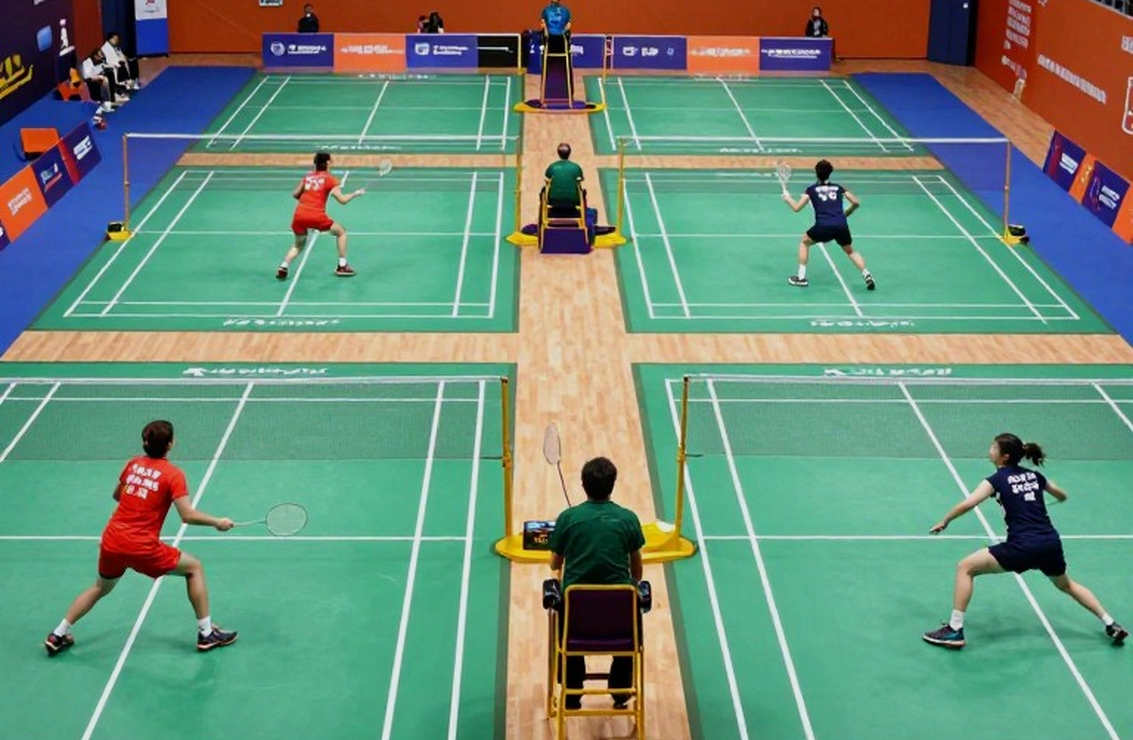
The structure matters. The Asian Games is not a BWF World Tour tier; it sits under the Olympic Council of Asia and Badminton Asia. The sequence is fixed: team event first, individual events second. For a nation whose elite core is a handful of names, that sequence is not a schedule but a load. Satwik-Chirag and Treesa-Gayatri carried team-tie intensity before walking into their individual draws. And in medal-table politics a badminton medal counts directly on the national tally, which ties funding and recognition to it. The expectation is built arithmetically; the preparation is built on limited resources.
I will put one thing on the record. Twenty-five matches at 2:30 a.m. taught me that fandom is labour, and so is logging results. At eighteen I started counting the tournaments that never made the front page; nobody commissioned that audit, and I kept it anyway. For Nagoya, the audit says the scorelines cluster in one place: the back end of matches.
Satwik-Chirag's exit does not profile as a technical collapse. For a front-and-back attacking pair, a 21-12 opening game means the first-three-shots contest and the flat mid-court exchange were both under control. Losing the next two means the opponent adjusted serve and receive, lengthened the rallies, and India's pair could not re-impose tempo. The players said it themselves: Satwik admitted the pair struggled to manage the mental demands, Chirag said they needed to stay calmer and make smarter decisions once the Thai pair fought back. That is a self-diagnosis of tactical discipline under pressure, not of stroke mechanics.
The central truth of Nagoya is that India's gold probability rested on a single pair, and once that pair exited, the medal probability fell to near zero. That is portfolio risk, not form risk.
The team event made the dependency explicit. Against China in the semi-final, both singles rubbers went: Lakshya Sen to Shi Yuqi, Ayush Shetty to Li Shifeng. Only the doubles rubber came in. In the women's team quarter-final against Japan, the picture was harsher: all three singles rubbers lost, the only point from Treesa Jolly and Gayatri Gopichand in doubles. In a best-of-five team format, that means India entered every tie effectively needing to win three of the four doubles-adjacent rubbers. That arithmetic is unsustainable regardless of the draw.
Now the conversion ledger. Four Indian entries reached quarter-finals: PV Sindhu, Unnati Hooda, Treesa-Gayatri, and Dhruv Kapila with Tanisha Crasto. None reached a semi-final. In single elimination, repeatedly losing the seventh match of a run is a ranking-quality signal: the classic profile of players sitting roughly eighth to twentieth, good enough to beat the field, not good enough to beat the top four. India's failure sat at the conversion layer, not the arrival layer.
The names in the last eight explain it: Akane Yamaguchi, Chen Yufei's quadrant, world number one Feng Yanzhe and Huang Dongping, Pearly Tan and Thinaah Muralitharan. Those are losses to quality, not to peers. Hooda drawing Yamaguchi, Shetty drawing Chou Tien-chen in the pre-quarter-finals, Lakshya Sen drawing Loh Kean Yew in the round of 32: that is a draw tax on young and unseeded players, not a form collapse.
The seeding trap closes the loop. Satwik-Chirag were seeded fourth, and seeding protects only the top eight. India's singles entries had little or no such protection. Without seeding protection, the draw becomes a tax; the tax becomes a loss; the loss blocks ranking points; and without points the next draw brings no seed either. That is a cycle, not a season.
Yet one asset was built in this campaign and barely written about. Treesa Jolly and Gayatri Gopichand beat the same Japanese women's doubles pair twice in one tournament, once in the team event and once in the individual draw. In a discipline dominated by Japan, Korea and China, that is rare evidence of a repeatable tactical edge. The other tournament was always there; I just turned the camera. There is a verification duty attached, though: the Japanese pairing named in the reporting is an unusual combination in the contemporary women's doubles landscape, and should be checked against Badminton Asia and BWF records before being treated as settled.
Now the counter-reading. Five numbered reasons, a Hangzhou comparison, and a social-media call to action: that is a content format, not an analytical finding. Media disappointment here is real, but its intensity is disproportionate to the breadth of the performance. Four quarter-finalists across four disciplines, a men's team bronze, a repeat win over a top Japanese pair: thin but not collapsed. And the Asian Games is not a primary ranking-points stop, so the damage is to funding justification and public narrative, not to ranking mechanics. Treating the defending-champion label as a competitive asset is the real trap; on court, it weighed more heavily on India's own shoulders than on the opponent's.
What to watch is specific. Satwik-Chirag's next three individual events: two consecutive pre-quarter-final exits would confirm decline rather than a situational collapse. Whether any of the four quarter-finalists reaches a semi-final at Super 500 level or above. Whether the singles players climb into the top 8-16 and secure seed protection. And the question off court: whether structured sports-psychology support is added to a squad that diagnosed itself. The answers will decide whether Nagoya was a dip in a cycle or the beginning of a trend.