
A National Champion in Four Matches: Reading the Design of Indonesia's Student Volleyball League
মূল উত্তর: ইন্দোনেশিয়ার Leagueা ভলি মাহাসিসওয়া (এলভিএম) ২০২৬ একটি ছাত্র-স্তরের Volleyball প্রতিযোগিতা, যা মিডিয়া প্ল্যাটForm মোজি আয়োজন করে এবং ভিদিও সম্প্রচার করে; ২৪ বিশ্ববিদ্যালয়ের ৩৬টি দল (পুরুষ ১৮, নারী ১৮) অক্টোবর ২০২৬-এ তিন শহরে ৬০ ম্যাচ খেলবে; প্রতিটি দল পুল পর্বে মাত্র দুটি ম্যাচ খেলে। মূল তথ্য: - ড্র সম্পন্ন ২৫ সেপ্টেম্বর ২০২৬; প্রতিযোগিতা ৭–৩১ অক্টোবর ২০২৬, তিনটি জাভা শহরে। - প্রতি বিভাগে মোট প্রাইজ মানি ২.৫ কোটি রুপিয়া; দুই বিভাগে প্রায় ৫ কোটি রুপিয়া (আনুমানিক ৩,১০০ মার্কিন ডলার)। - ভেন্যু তিনটি: যোগ্যাকার্তার জিওআর ইউআইআই, সুরাবয়ার জিওআর উনেসা, জাকার্তার জিওআর পের্তামিনা সিমপ্রুগ। - প্রতিদিন চারটি ম্যাচ-স্লট; জাকার্তায় সময় দুই ঘণ্টা আগে (WIB ১১.০০–১৭.০০)। - নাম-করা সব ক্যাম্পাস জাভায়; সুমাত্রা, কালিমান্তান, সুলাওয়েসি বা পূর্ব ইন্দোনেশিয়া থেকে কোনও দল নেই। সূত্র: মোজির প্রতিযোগিতা-ঘোষণা, বোলা.নেট-এ প্রকাশিত; ড্র তারিখ ২৫ সেপ্টেম্বর ২০২৬। সম্ভাব্য Search: প্রশ্ন: এলভিএম ২০২৬-এ চ্যাম্পিয়ন কতটি ম্যাচ খেলবে? উত্তর: তিন দলের পুলে দুটি ম্যাচ, তারপর সেমিফাইনাল ও ফাইনাল — সর্বোচ্চ চারটি ম্যাচ। প্রশ্ন: এলভিএম ২০২৬-এ পুরুষ ও নারী বিভাগে প্রাইজ মানি সমান কি? উত্তর: হ্যাঁ, দুই বিভাগে অভিন্ন প্রাইজ-ব্যান্ড প্রয়োগ করা হয়েছে, যা এই স্তরে সমতা-নকশার সূচক। প্রশ্ন: এলভিএমের সঙ্গে ইন্দোনেশিয়ার ফেডারেশনের সম্পর্ক কী? উত্তর: ঘোষণাপত্রে পিবিভিএসআইয়ের কোনও উল্লেখ নেই, তাই স্বীকৃতি-Position স্পষ্ট নয়।
On September 25, 2026, the draw closed for Indonesia's student volleyball competition, Liga Voli Mahasiswa (LVM) 2026. Thirty-six teams from twenty-four campuses, eighteen men's and eighteen women's, sixty matches across three cities. The organizer is the media platform MOJI; the streaming partner is VIDIO. The announcement presents its numbers neatly arranged. But when I sketched the pool structure on paper, a number surfaced that appears nowhere in the document: the champion of this league will play at most four matches before touching the trophy.
Six teams per gender in each city, split into two pools of three. A team's entire pool life is exactly two matches. Then semifinals, then a final. A genuine champion would settle its identity in four matches, even though the competition carries the word 'league' — a word that normally implies long tables, home-and-away routine, and home-court advantage. None of that exists here. That gap between name and design is the real subject of this piece.
I have watched volleyball from courtside for four decades — beginning with sports commentary at Bangladesh Betar in 2026, then nearly three decades editing Krira Jagat from 2026, then returning to Rangpur in 2026 to run a one-woman tactical page. I coached a school side there for six years and played district volleyball myself, and that experience taught me that competition design and on-court reality are two different things, with the gap usually hidden in the program sheet. The day I stopped counting players and started counting intentions, I found the rotation room. Reading LVM's announcement, I did the same: I looked not for who plays, but for what each actor wants.
Context: the design of a first edition
The organizer is MOJI, and Banardi Rachmad, its Deputy Director of Programming, frames the stated aim as making the campus a new stage for volleyball. Three venues: GOR UII in Yogyakarta (October 7–11), GOR Unesa in Surabaya (October 14–18), and GOR Pertamina Simprug in Jakarta (October 27–31). Four match slots per day; Yogyakarta and Surabaya at 13:00, 15:00, 17:00 and 19:00 Western Indonesian Time; Jakarta at 11:00, 13:00, 15:00 and 17:00. Prize money per sector: Rp10 million for first, Rp7.5 million for second, Rp5 million for third, Rp2.5 million for fourth. Across both sectors that is roughly Rp50 million, an estimated 3,100 US dollars — a figure the announcement itself labels development money.
The named teams cluster on Java: Yogyakarta, Semarang, Surabaya, Malang, Jakarta, Bandung, Kediri. Not one campus from Sumatra, Kalimantan, Sulawesi or eastern Indonesia appears in the field. The announcement never names PBVSI, the national federation, and the largest omission of all: not a single line explains which pool feeds which crossover, what the tiebreakers are, or what the student eligibility conditions are.
Core analysis: three festivals under one brand
LVM 2026 is not a single national bracket; it is three regional festivals run under one brand, each lasting five days. An eleven-day gap separates Surabaya from Jakarta, and nowhere does the announcement state whether the series winners will meet at the end. If they will not, then one season produces three separate champions, and the thing called a national title simply does not exist.
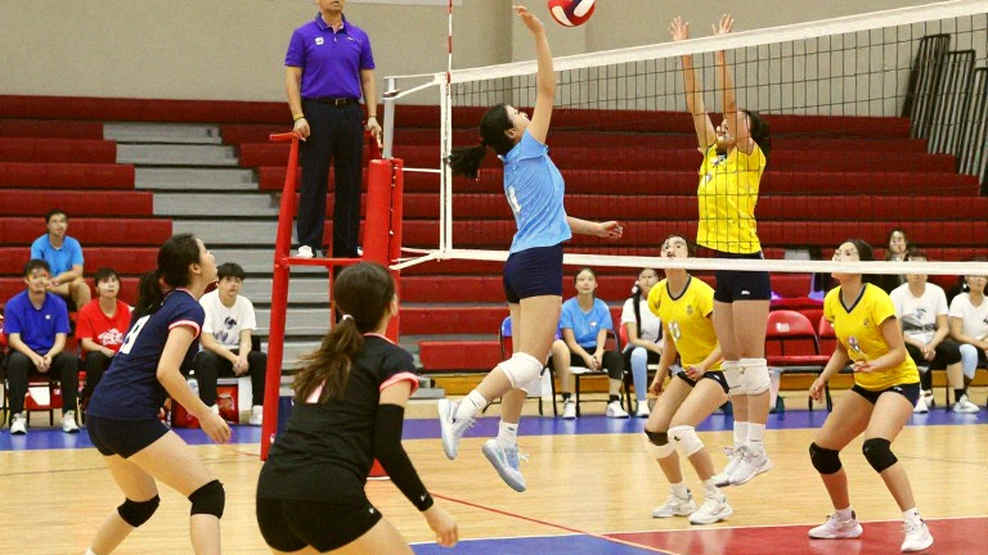
My second observation concerns the schedule. Four fixed slots per day means match rhythm is set by camera convenience, not by athlete recovery. The reason Jakarta's slots shift two hours earlier is not given — likely venue availability or a broadcast obligation. At student level the load is modest, so there is no immediate danger. But the principle is worth noting: where the broadcast schedule is fixed before the competition design, the athlete's physical rhythm sits in the second row. I have spent years writing about national-team camp calendars and hosting decisions, and keeping account of them — buying time is the first condition for building a system. Here time has been bought five days at a time, three times over.
Third, I read the prize structure not as an incentive but as a subsidy. Fourth place earns Rp2.5 million, roughly 155 US dollars, nowhere near covering a team's three days of travel and lodging. The players are not competing for cash. For a campus team, the real currency here is broadcast time — four matches in front of a camera. That is precisely where MOJI's position becomes clear: a media platform is building a rights library and participation volume in campus volleyball, just as it already holds national-team broadcast ties. Commercially this is a rational strategy; but its success metric will be watch time, not the player-development ladder.
Fourth, the eighteen-eighteen split and equal prize bands in both sectors are a deliberate design decision. Such parity is uncommon in Indonesian grassroots events and is replicable for campus leagues elsewhere. Caution is still warranted: equal cheques are not equal futures. On the women's side the next step after campus volleyball — Proliga or pool-based clubs — is narrower than on the men's side, so the paper parity does not make the staircase the same length.
The comparison with Bangladesh matters here, because the two countries have chosen opposite designs. Bangladesh's pipeline is institutional: Army, Navy, Police, Ansars and VDP, PDB. There, salary structures rather than scholarships retain players. When I first drew Bangladesh Navy's 5-1 system on paper, eleven annotated screenshots of a single rotation, I understood that the real foundation of the competition sits in recruitment, not on the court. Indonesia's LVM pays no salaries, but Bangladesh has no campus layer of this scale either — though Cox's Bazar beach volleyball and district associations partly fill that gap. Each design solves one problem: institutions retain players but narrow the field; campuses widen the field but promise no retention. In Brazil, where I was born, universities are not the primary pipeline at all — club salary ladders are. The comparison is not meant as scolding but as explanation: conversion happens in the salary structure, not in the slogan.
An older lesson applies here too. In 2026, while filing World Cup columns, I sat in a Rangpur cyber café watching a buffering stream of Bangladesh's AVC Challenge Cup semifinal in Sri Lanka — the deepest run in the team's history. Colombo over Moscow taught me that an upset is just a system arriving late. The 2026 U-20 Asian Championship win over China, the same year's U-23 Central Zone title, the 2026 CAVA runners-up finish — none of those were miracles; they came from hosting control, long camps and federation patience. If LVM cannot become a camp calendar, its campus energy will stay locked inside three five-day events.
Contrarian read: what nobody will notice
The largest blind spot hides inside the language. Everyone is reading this as development, but the system-holder is not the federation — it is a broadcaster. When a media company holds the system, success is defined in broadcast minutes, while eligibility rules, tiebreakers and federation recognition go unaddressed — and a second edition usually dies not from equipment failure but from a disputed result.
A second blind spot sits in the arithmetic of the promise. The phrase national stage is used, yet all twenty-four named campuses are in Javanese cities and all three venues are on Java. Yogyakarta to Jakarta is roughly 550 kilometres, a single regional footprint — for players outside Java and the capital, the door remains invisible.
A third blind spot is the dismissal of the gap itself. Jakarta opens eleven days after Surabaya ends, and no content is announced to hold audience attention through that window. Losing rhythm is the least-discussed defeat in small events.
What to watch next
Four signals will occupy me over the next twelve months. First, a published rulebook covering advancement, tiebreakers and eligibility. Second, PBVSI's official sanctioning or its silence, which will decide whether this stage is a pipeline or a park. Third, a 2027 edition announcement. Fourth, any entry from beyond Java. If two of those four fail to arrive, LVM 2026 cannot be read as a structural story in volleyball; it must be read as a successful broadcast season.
One question I prefer to leave open, because no camera will capture the answer: of the campuses fielding women's teams today, how many will still enter those thirty-six slots in three years if no salary ladder appears? Courage is not decided on the first touch, nor on the third pass — it is decided in the rulebook of the third edition.