
The Hip Scan's 'Reassurance' and a Silent Hamstring Warning: Bangladesh's Six-Day Audit Before the West Indies Series
**মূল উত্তর:** লিটন দাসের হিপ স্ক্যানে বড় সমস্যা পাওয়া যায়নি, তবে সামান্য মাসল ইস্যু শনাক্ত হয়েছে; ২২ অক্টোবরের ফিটনেস টেস্টের পর টেস্ট সিরিজে তাঁর খেলা নির্ভর করবে। নাঈম হাসানের হ্যামস্ট্রিংয়ে দুর্বলতা থাকায় ব্রেকিং লোডে Bowling ঝুঁকিপূর্ণ। **মূল তথ্য:** - ওয়েস্ট ইন্ডিজ ১৮ অক্টোবর ঢাকায় পৌঁছেছে; প্রস্তুতি ম্যাচ ২২–২৩ অক্টোবর বাসুন্ধরায়। - প্রথম টেস্ট ২৮ অক্টোবর মিরপুর, দ্বিতীয় টেস্ট ৫ নভেম্বর সিলেট; সিরিজ ডব্লিউটিসি অংশ। - বাংলাদেশ চার নম্বরে, ৬ টেস্টে ৪০ পয়েন্ট, পিসিটি ৫৫.৫৬ শতাংশ। - লিটন ত্রিদেশীয় ওয়ানডে সিরিজ থেকে বাদ; টেস্ট প্রাপ্তি এখনও অনিশ্চিত। - নাঈম চতুর্থ ও পঞ্চম দিন স্ট্র্যাপিং নিয়ে খেলেছিলেন; পরে মাসলে দুর্বলতা ধরা পড়ে। **সূত্র:** Cricbuzz প্রতিবেদন, প্রকাশকাল ১৯ অক্টোবর (বছর উল্লেখ নেই) | Cross-checked: cricsultan.com **সম্পর্কিত প্রশ্নোত্তর:** প্রশ্ন: লিটন দাস কি প্রথম টেস্টে খেলবেন? উত্তর: ২২ অক্টোবরের ফিটনেস টেস্টের ফলই নির্ধারক, তবে সময়ভিত্তিক উত্তর প্রোভিশনাল ডায়াগনসিসের সংকেত দেয়। প্রশ্ন: নাঈম হাসানের অনুপস্থিতি কতটা বড় ক্ষতি? উত্তর: হোম টেস্টে স্পিন ৬০–৭০ শতাংশ ওভার বোলায় স্পেশালিস্ট স্পিনারের ঘাটতি আক্রমণকে সরাসরি দুর্বল করে। প্রশ্ন: দুই ইনজুরির মধ্যে বেশি ঝুঁকিপূর্ণ কোনটি? উত্তর: লিটনের ক্ষেত্রে Batting, কিপিং ও লিডারশিপ একসাথে ক্ষতিগ্রস্ত হওয়ায় তাঁর ঝুঁকি বেশি প্রভাব ফেলে।
The line in the scan report everyone read: “no major issue in the hip joint.” The line nobody quoted: “but there is a slight muscle issue.” A light physiotherapy session at Mirpur's Sher-e-Bangla on Monday, and a time-based answer from a BCB medical committee member — “we will be able to say in a couple of days.” Put the three together and the picture is not reassuring. The fitness test is on 22 October, the first Test on 28 October; six days between them. In physiotherapy language, that is not a conditioning window. It is a clearance window. I do not trust a number before I audit the inputs — and the most important number in this bulletin is six.
The second thread is quieter. The most informative sentence in the Nayeem Hasan hamstring report is not a scan result — it is that he played days four and five with strapping. The injury was tolerable under controlled load; the weakness in the muscle was found afterwards. The medical staff's warning about “high-speed running with a sharp braking action” maps directly onto the braking phase of the delivery stride. An off-spinner repeats that exact loading pattern 15 to 20 times an over. A hamstring that cannot tolerate braking load cannot bowl a spell, however comfortably it jogs.
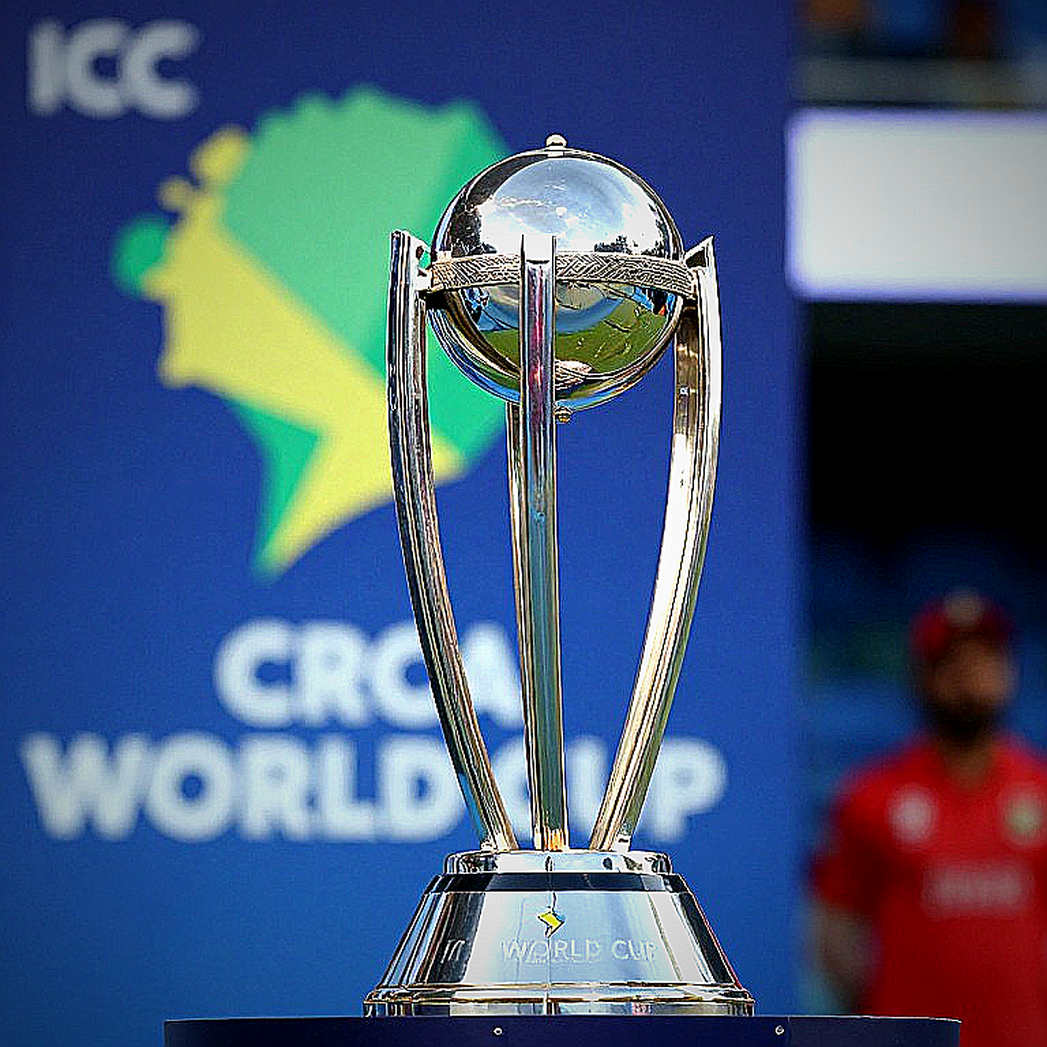
The context needs to be kept clean, because two formats are running at once. West Indies arrived in Dhaka on 18 October; a two-day warm-up against a BCB XI is scheduled at Basundhara on 22–23 October; the first Test is at Mirpur on 28 October and the second at Sylhet on 5 November. The series sits inside the ICC World Test Championship. Bangladesh are fourth — 40 points from six Tests, three wins, two losses, one draw, a percentage of 55.56. The arithmetic is verifiable: 3×12 + 1×4 = 40, and 40/72 = 55.56 percent. But the quality of the opposition across those six Tests appears nowhere — fourth here is a position, not an established level. Keep in mind as well that Litton Das has been ruled out of the ongoing tri-nation ODI series involving Afghanistan and Zimbabwe; that is a medical decision taken under a different workload, not a Test-fitness forecast.
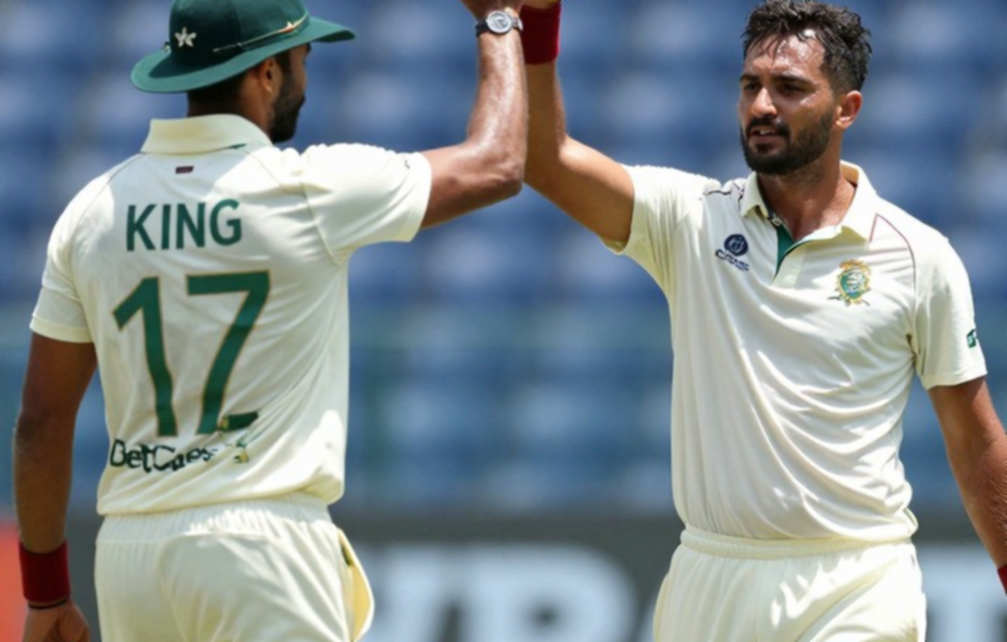
The scan's “no major problem” is a structural finding, not a functional clearance. Imaging speaks to the integrity of bone and joint. A keeper-batter's hip is loaded from three directions: repeated deep squatting for 90-plus overs an innings, lateral push-off in diving and keeping, and rotational hip drive in the batting stroke. A “slight muscle issue” in the hip region is precisely the finding that is benign on imaging and limiting in function. That gap between the headline and the body text is where the real story sits.
The medical committee gave a time-based answer, not a criteria-based one. “We will be able to say in a couple of days” usually means the clinician is waiting to see whether the muscle settles under load. In soft-tissue and hip cases that often signals a provisional diagnosis. Six days do not buy a genuine return-to-performance progression; they buy a signature.
The match impact of the two injuries is not symmetrical, and that asymmetry is the least discussed part of the bulletin. Nayeem Hasan's absence degrades the attack; Litton Das's absence degrades batting, keeping and leadership at the same time. If spin bowls 60 to 70 percent of the overs in a home Test, losing a specialist spinner hurts — but that slot is replaceable. A three-way deficit of keeper, top-order batter and leadership figure is not. Litton is the ODI captain; the report never clarifies how far his Test leadership role extends. That is a genuine information gap, and it matters more than the scan.
The venue split deserves its own line. Sher-e-Bangla in Mirpur is historically the country's slowest, lowest, most spin-friendly surface, where batting gets harder as the match ages. Sylhet is a better batting surface with more pace and carry, spin becoming a factor later. The twin-spin gamble therefore pays in Mirpur; the real examination of a weakened batting line-up comes in Sylhet. That venue characterisation is my own circuit knowledge, not something this report states.
Selection risk is not equal across the two Tests either. Even with a clearance for Mirpur on 28 October, the turnaround to Sylhet on 5 November is four days. A keeper-batter carrying a hip niggle accumulates load fastest in the second and third innings of back-to-back Tests. My read is that he is more likely to play the first Test than the second; a specialist keeper rotation for Sylhet is a real, undiscussed option.
This is where the replacement-level question arrives. Everyone reads an injury bulletin for the name of the first-choice player; nobody reads it for the benchmark of the man who comes in. Whoever covers Litton has to absorb roughly the first 20 overs against the new ball in a Test, and the run-rate and dot-ball pressure maths in that phase is completely different. I have sat at Mirpur through enough innings to know how often the batting folds after day three; losing a keeper-batter there changes not just runs but review usage and field placement.
Now the contrarian reading. First, the headline “no major issue” is less optimistic than the body text: it lowers tail risk — surgery, a long layoff — and does not lower near-term availability risk, and the two get conflated routinely. Second, treating an ODI withdrawal as a Test prognosis is classic cross-format contamination; it is a medical decision under a different workload. Third, percentage points off a six-Test sample are volatile, and one defeat can move the table, so going to a conclusion without widening the interval is not how I work. If the sample is small, I widen the interval; if the edge is small, I pass. Here the performance data is effectively zero — no home or away splits, no twelve-month trend, only medical status. So on “Litton fit” and “Litton unfit” alike, I pass.
One more variable almost nobody raises. A two-day warm-up is an extremely short adaptation window for a West Indies side arriving from the Caribbean. If rain takes out 22–23 October, they could walk into the Dhaka Test with almost no subcontinental match preparation. That variable may shape the series more than either injury. Late-October Dhaka carries post-monsoon humidity and residual rain risk; that is seasonal climatology, not something the report states.
Looking forward, three signals are worth tracking. One, whether the 22 October fitness test returns a criteria-based or a time-based answer — a pass, or another two days. Two, whether a specialist keeper appears in the squad announcement; if he does, that is the early signal of a Sylhet rotation. Three, not the Mirpur pitch but the depth of the batting line-up at Sylhet, because that is where the replacement-level gap will be most visible. A scan report can offer reassurance; the number that will settle this series is six — six days of clearance, and six Tests' worth of an unstable table. Which one are you auditing?