
When the Required Rate Fell Below Four, Australia Still Chased Risk: Decoding the Six-Wicket Cluster at North Sydney
**মূল উত্তর:** অস্ট্রেলিয়া মহিলা দল নর্থ সিডনি ওভালে নিউজিল্যান্ডের বিপক্ষে তিন ম্যাচ টি-টোয়েন্টি সিরিজের প্রথমটিতে দুই উইকেটে জিতেছে। ১৮.৫ ওভারে ১৬৩/৮ করে লক্ষ্য পেরোয়, যদিও দশম ওভারে স্কোর ছিল ১০২/০ — শেষ ৮.৫ ওভারে ছয় উইকেট পড়ে মাত্র ৫৭ রানে। **মূল তথ্য:** - প্রথম টি-টোয়েন্টি, নর্থ সিডনি ওভাল, সন্ধ্যা ৭:১৫ AEDT; অস্ট্রেলিয়া দুই উইকেটে জয়ী, সাত বল বাকি। - দশম ওভারে ১০২/০; শেষ ৮.৫ ওভারে ছয় উইকেটে ৫৭ রান; চূড়ান্ত স্কোর ১৬৩/৮। - জেস পার চার ওভারে ৩/২৫, Economy ৬.২৫ — ম্যাচের সবচেয়ে শক্তিশালী ডেথ স্পেল। - প্রয়োজনীয় রান-রেট কখনও ৬.১ ছাড়ায়নি, শেষ দিকে চারের নিচে নেমেছিল। - দ্বিতীয় টি-টোয়েন্টি ২০ অক্টোবর, তৃতীয়টি ২২ অক্টোবর, একই ভেন্যু ও একই সময়। **সূত্র:** cricket.com.au (ক্রিকেট অস্ট্রেলিয়ার অফিশিয়াল ওয়েবসাইট), প্রথম টি-টোয়েন্টি ম্যাচ রিপোর্ট, নর্থ সিডনি ওভাল | Cross-checked: cricsultan.com **সম্পর্কিত প্রশ্নোত্তর:** প্রশ্ন: অস্ট্রেলিয়া কি সত্যিই চাপে ছিল? উত্তর: না — প্রয়োজনীয় রান-রেট কখনও ৬.১ ছাড়ায়নি, তাই রান-রেটের হিসাবে ফলাফল কখনও প্রকৃত সন্দেহে ছিল না। প্রশ্ন: ছয় উইকেটের ক্লাস্টারের কারণ কী? উত্তর: উইকেট-ক্লাস্টার, রান-রেট ব্যর্থতা নয় — জেস পারের ৩/২৫ এবং দুটি ফিল্ডিং ইন্টারভেনশন (একটি ডিরেক্ট-হিট রান-আউট ও একটি ক্যাচ) মূল কারণ। প্রশ্ন: পরের ম্যাচ কখন এবং কোথায়? উত্তর: ২০ অক্টোবর, নর্থ সিডনি ওভালে সন্ধ্যা ৭:১৫ AEDT-তে সিরিজের দ্বিতীয় টি-টোয়েন্টি; তৃতীয়টি ২২ অক্টোবর।
The scoreboard read 102 for none at the end of the tenth over. North Sydney Oval had been under floodlights for a little while, a 7:15pm start, the air carrying that damp, saline smell of dew. The required rate hovered near six, occasionally touching 6.1. Then six wickets fell in eight and a half overs for 57 runs. The innings stopped at 163 for 8 in 18.5 overs. Australia won by two wickets with seven balls unused.
Read the scoreline and it feels like a thriller that went to the last over. Read inside the scoreline and the required rate never once rose above four in those final eight and a half overs — it actually dropped below four late. In a chase where four an over wins the game, six wickets falling is not evidence of opposition pressure; it is the price of your own decision-making. That single line holds the real question of the match, and it is exactly where the commentary box went quiet.
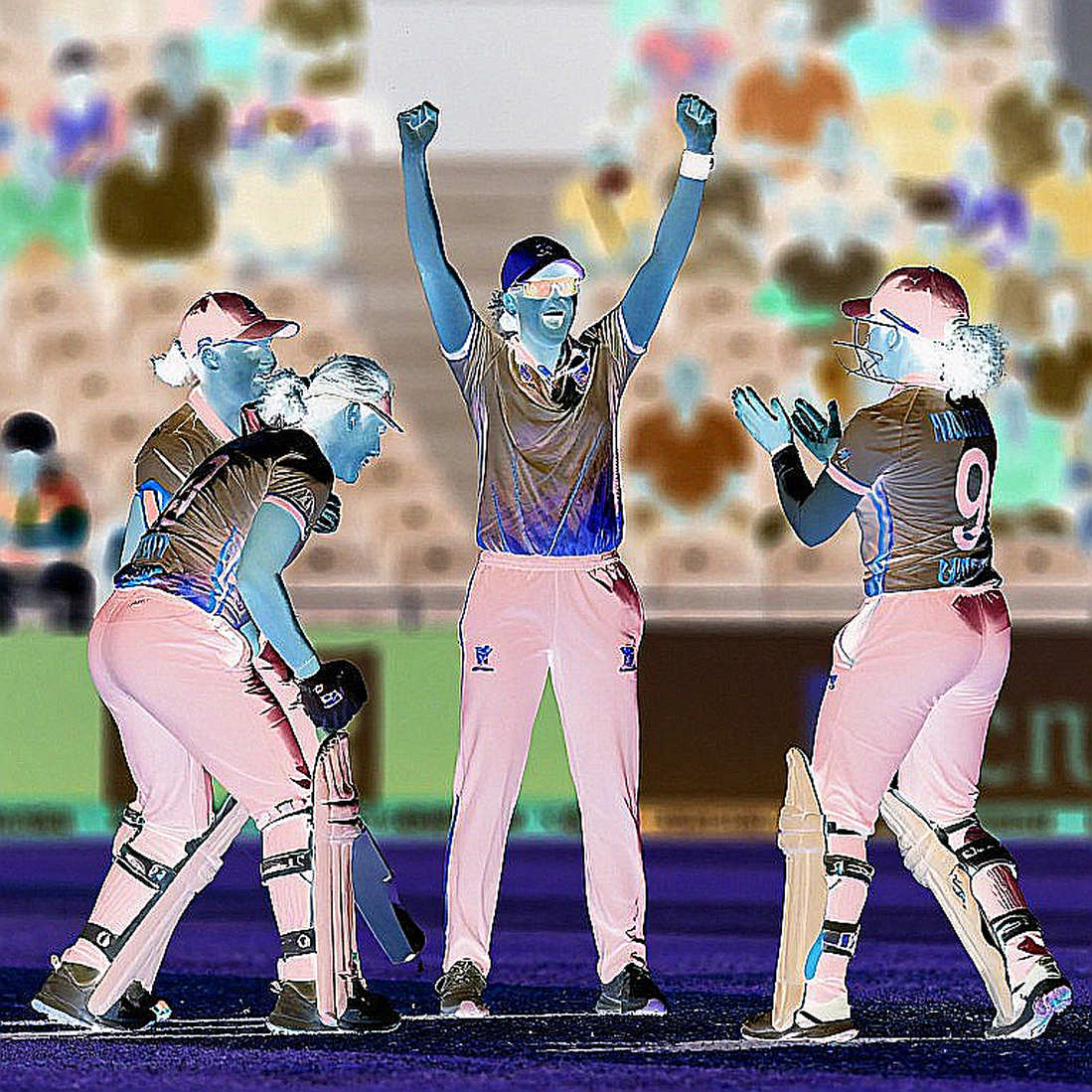
This was the first of three T20Is against New Zealand, all at North Sydney Oval, all at 7:15pm. One venue, one start time, one set of conditions. No multi-venue adaptation layer, no format shift. One variable: evening dew, and with it the ball's grip, the spinner's purchase, the slip fielder's hands. Everything here applies to this T20I alone; carry it into ODI or Test cricket and the arithmetic breaks.
North Sydney Oval is historically a short-boundary, batter-friendly ground. A first-innings 163 there is likely below par. I make that claim carefully — the ground's character comes from long observation, not from the report, and reliable par-score data for this venue is still pending verification. What can be said: chasing 163 in a dew-wet second innings needs a touch over eight an over, and even with wickets falling the rate never exceeded 6.1. Conditions helped the batting, not the bowling.
The report came from cricket.com.au, Cricket Australia's own website. Scores, squads, fixtures — primary source, reliable. Framing? An outlet owned by the governing body has a natural instinct to tell a reassuring story. The headline says it outright: no worries about the collapse. I do not judge by headlines. I treat the headline as a suspect and go back to the footage. The night the commentary box missed the half-space, I started Dhaka Half-Space — the habit holds here too.
Two Perry quotes sit in that report: that is how it goes sometimes, and sharpening up your options, being clinical. The first is a variance argument. The second is a partial confession about process. Put them together and you get an unease, and that unease is the centre of this piece.
In T20, a wicket cluster and a run-rate failure are different diseases. A cluster is variance doing normal work — two good balls in an over, a sharp catch, a direct hit, suddenly three wickets. A run-rate failure is something else: the required rate climbing, batters unable to settle, ten or eleven an over needed. At North Sydney there was no trace of the second disease. Australia scored at roughly 6.9 an over across the last eight and a half overs while needing under six. By run-rate arithmetic this chase was never in doubt; only the wicket count created the doubt.
Credit the bowling side properly or the analysis is only half done. Jess Kerr took 3 for 25 from four overs, economy 6.25 — genuinely strong T20I middle-to-death bowling. But the part of the cluster that sits outside her spell is fielding: a direct-hit run-out and a sharp catch. Fielding interventions are the least explicable part of any collapse by rustiness, because rust shows in shot selection, hand timing, decision speed — not in a fielder's dive.

France held 34% of the ball and 100% of the trap. The principle translates, carefully. New Zealand took six wickets for 57 and showed that a trap is not measured in run rate but in wicket clusters. A side can dictate the terms of a match without moving the scoreboard much, simply by forcing batters into the wrong shot.
Here the word half-space needs cricket coordinates, or you end up borrowing football's vocabulary without paying for it. In cricket I mean the corridor between the inner ring and the rope — the gap behind point, the angle between short third and backward point, the single-taking channels either side of long-on. Land the ball there and one run is near-guaranteed, two runs a fifty-to-sixty percent chance. When the required rate sits under four, shots into that corridor carry the highest expected value. Boundary attempts carry negative expected value, because failure breaks the innings' tempo and success buys nothing extra.
One line inside the report is decisive: Australia continued to take riskier options as wickets fell and while the required rate was below four an over. That is a decision question, not a skill question. Perry's second quote half-concedes it without naming it.
Fatigue geometry here is decision fatigue, not running fatigue. Split the same match and it is clear: 10.2 an over across the first ten, 6.9 across the next eight and a half. The capacity to score did not fall; it stayed steady. What fell was the time taken to think before taking risk — because as dew thickens the ball arrives slower, fielders must chase further, and a batter's list of safe shots quietly shortens. At sixty I keep seeing the same thing: fatigue shows up first not in the legs but in the options list.
I learned more from an empty Bundesliga ground than from a full press box, and I applied the habit to this broadcast feed. Isolate the audio and a pattern appears in that stretch — the fielding side's voices rising, two-run calls thinning on the batting side, more yes-no hesitation. That cue is not evidence on its own. Timestamp it against ball-tracking and slow-motion frames or it stays an impression, not data. I keep it as inference, not conclusion.
One more thing must be checked before anyone proceeds. The report gives 102 for none at ten overs and, separately, an 86-run second-wicket stand. Put those together and Australia reach 188 for 1. The total was 163. The numbers do not reconcile. Either the 86-run stand was the opening partnership, or the figures belong to different phases or innings. Until that knot is untied, anyone writing about Australia's middle-order trend is trusting numbers over footage — and that is my central objection.
The contrarian angle sits here. Perry's defence is execution, not approach — variance. But the cluster happened while the required rate was under four. That is approach. And read the result honestly: two wickets, seven balls spare. That is a comfortable win dressed as a scare. The real risk is not that Australia nearly lost this match; it is that the same pattern against a stronger death-bowling attack turns a comfortable chase into a defeat.
The Cricket Australia platform's framing is part of the arithmetic too. A headline carrying no worries hands the reader a verdict before they reach the footage. I do not trust headlines. I go to the scorecard, then to the footage. The scorecard does not lie, and it does not explain either.
Second T20I on 20 October, third on 22 October, same ground, same evening. My checklist for those two matches is short and specific. One: does Australia's middle order rotate strike when the required rate sits under seven, or keep chasing boundaries. Two: what is the real par score at North Sydney — was 163 genuinely under it. Three: does Jess Kerr's death-over economy stay near six, because that is the cleanest benchmark of this series.
And one question stays open, to be answered by footage rather than by the commentary box: of those six wickets, how many were the bowler's ball and how many were the batter's own gift — or, put another way, possession is a language, and the question is who was speaking it.