
Bangladesh in the Asian Champions Trophy: An Inherited Slot and the Real Management Test
**মূল উত্তর:** বাংলাদেশ এশিয়ান চ্যাম্পিয়নস ট্রফিতে পাকিস্তানের বদলি হিসেবে খেলবে। পাঞ্জাবের দুটি ভেন্যুতে ২৭ অক্টোবর থেকে ৫ নভেম্বর ২০২৬ পর্যন্ত ছয় দলের এই আসর চলবে; বাংলাদেশের প্রথম ম্যাচ ২৭ অক্টোবর ২০২৬ ভারতের বিপক্ষে। **মূল তথ্য:** - ছয় দল: ভারত, বাংলাদেশ, জাপান, মালয়েশিয়া, দক্ষিণ কোরিয়া ও চীন; সিঙ্গেল রাউন্ড রবিন, প্রতি দলের পাঁচ ম্যাচ। - শীর্ষ চার দল ৪ নভেম্বর ২০২৬ সেমিফাইনালে; পঞ্চম ও ষষ্ঠ দল খেলবে প্লে-অফে। - পাকিস্তান হকি ফেডারেশনের প্রেসিডেন্ট মহিউদ্দিন আহমেদ ওয়ানি বলেছিলেন, ভারত সফর সরকারের সিদ্ধান্তের ওপর নির্ভরশীল। - বাংলাদেশের বাকি ম্যাচ: ২৯ অক্টোবর জাপান, ৩০ অক্টোবর মালয়েশিয়া, ১ নভেম্বর দক্ষিণ কোরিয়া, ২ নভেম্বর চীন। **সূত্র:** এশিয়ান হকি ফেডারেশন ঘোষিত সূচি; পাকিস্তান হকি ফেডারেশনের বক্তব্য; মূল প্রতিবেদন সূত্র: এফএইচএম। **সম্ভাব্য প্রশ্নোত্তর:** প্রশ্ন: বাংলাদেশ কেন এশিয়ান চ্যাম্পিয়নস ট্রফিতে খেলছে? উত্তর: পাকিস্তান ভারত সফরের সরকারি অনুমতি না পাওয়ায় বাংলাদেশ বদলি দল হিসেবে সুযোগ পেয়েছে। প্রশ্ন: বাংলাদেশের ম্যাচগুলো কোন তারিখে? উত্তর: ২৭ অক্টোবর ভারত, ২৯ অক্টোবর জাপান, ৩০ অক্টোবর মালয়েশিয়া, ১ নভেম্বর দক্ষিণ কোরিয়া এবং ২ নভেম্বর চীন। প্রশ্ন: সেমিফাইনাল কবে হবে? উত্তর: ৪ নভেম্বর ২০২৬-এ শীর্ষ চার দল সেমিফাইনাল খেলবে।
Last week, when the Asian Hockey Federation's schedule surfaced on my laptop screen, my eye stopped on one line — 27 October 2026: India versus Bangladesh, 7:30 p.m. A six-nation continental event, the Asian Champions Trophy, and Bangladesh opens against the reigning champions and Asian Games gold medallists. Two venues in Punjab will host the tournament from 27 October to 5 November. The bigger news, though, sits not in the dates but in the entry list — Bangladesh is here in Pakistan's place. Pakistan Hockey Federation president Mohiuddin Ahmed Wani said last month that travelling to India for the event depended on his government's decision. The decision never came, and Bangladesh stepped into the vacancy. I do not read this as luck. I read it as the start of an audit.
In 2026, digitising eleven hours of 2026 Asia Cup footage in a corner of my house, I was reminded how Dhaka hockey once owned an entire city's evening. An empty stadium still has a full archive; the question is what is happening on the pitch, outside the archive.
Context
In October 2026, Dhaka hosted the Asia Cup. At Maulana Bhasani Hockey Stadium I was running a live tactical show on Facebook — three camera angles, a former national drag-flicker seated beside me. Bangladesh conceded nine penalty corners across two matches that fortnight; that was my headline data point. The show averaged 14,000 views — small by cricket's measure, but proof that hockey can hold a digital audience. The Asia Cup came home on a new feed, yet the homecoming was an event, not a calendar.
The Asian Champions Trophy (ACT) belongs to that calendar, but the tier needs stating plainly. It is not the Asia Cup, not the Asian Games, and certainly not the Olympics or a senior World Cup. It is Asia's regular top-six continental event. Six teams play a single round-robin league phase, five matches each. The top four reach the semi-finals. The bottom two, fifth and sixth, play a placement play-off. The first semi-final pits first against fourth; second and third contest the other.
Bangladesh's schedule reads like this: 27 October against India at 7:30 p.m., 29 October against Japan at 5:15 p.m., 30 October against Malaysia at 3:30 p.m., 1 November against South Korea at 3:30 p.m., and 2 November against China at 3:30 p.m. Play-offs and semi-finals fall on 4 November.
Core analysis
The sequence of the five matches is itself the biggest tactical fact. India on opening night, then Japan, Malaysia, Korea, China — ordered on paper from hardest to easiest, yet in reality the pressure runs the other way. Facing a side like India first means the risk of conceding inside fifteen minutes and losing the rhythm. The real test of the opener is not conceding a goal; it is recovering the tactical rhythm before half-time.
Then comes the arithmetic of fitness. Three matches between 27 and 30 October — two more battles, against Japan and Malaysia, inside seventy-two hours of the opener. Three matches in four days means survival without bench depth is impossible — and the bench has historically been Bangladesh's weakest area.
Back to penalty corners. Nine PCs conceded across two matches in 2026 tells you that the first condition of self-defence is the discipline of defensive runners. Against Asia's top sides, the penalty-corner save rate decides results directly; for Bangladesh, PC defence matters as much as the final scoreline. India's PC battery, Korea's structured press — in both cases, one wrong first step from a runner and the scoreboard flips fast.
Opponent by opponent. Against India, low expectations are the realistic setting; their goal-hungry forward line and PC quality are Asia's best. Japan is among the most disciplined sides on the continent, patient in possession — this is Bangladesh's biggest points opportunity and their biggest trap, because you cannot sit in midfield and break Japan. Malaysia counter-attacks at speed; Korea is structured and physical; China is on the rise, and facing them in match five on tired legs means playing the numbers. Bangladesh's realistic target is not the semi-final but staying competitive in at least two matches — because the pressure of a points table is itself new to this group.
In my 2026 show, I debated a former national drag-flicker on whether Bangladesh should press high with two forwards or sit deep in midfield and wait to counter. That debate remains live, because conceding early in an event like the ACT collapses the counter-attacking plan. Choosing between a high press and a counter-attack is a luxury; in a top-six event, a side must know both.
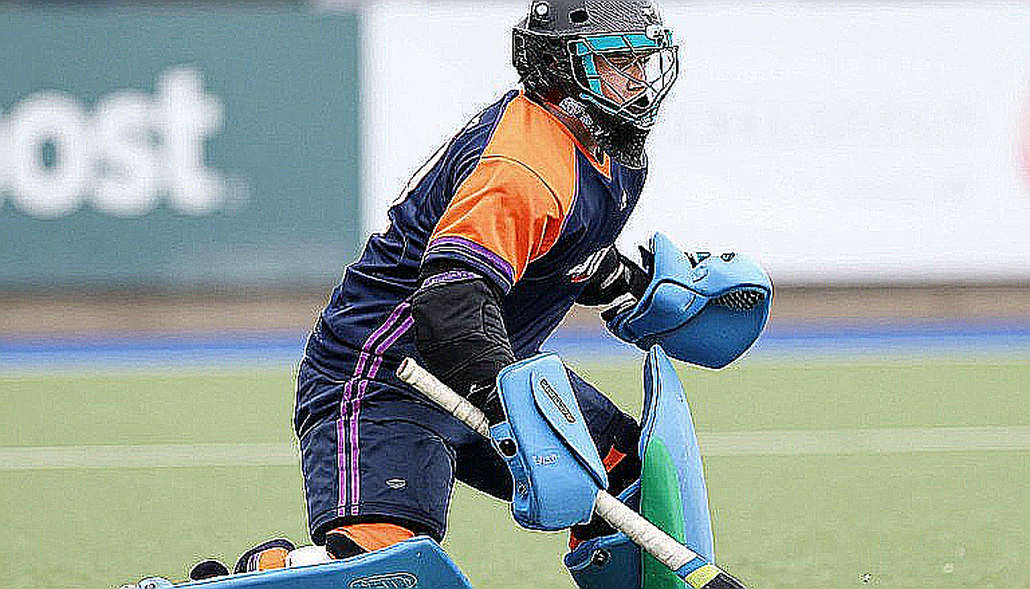
On goalkeeping, one point deserves airing. On short corners, a goalkeeper's positioning and deflection arithmetic become far more precise at Asia's top level; one wrong step is a goal. On the short corner, the goalkeeper's first movement is Bangladesh's invisible scoreline — it does not show on television, it shows in results.

Now, where does this squad's foundation sit? Three AHF Cup titles in 2026, 2026 and 2026; Junior AHF Cup titles in 2026, 2026 and 2026; a first Junior World Cup qualification. The talent pool is not in doubt. But a warning is essential, because those names sound larger than they are: all of it is AHF Cup-tier success, not a senior World Cup or an Olympics. A junior trophy is never proof that the system works; the proof is which club, in which league, those boys are playing for after they turn 21. That bridge is broken — and it will shape this event directly, because the ACT demands experience, not just talent.
Look at the domestic structure and the arithmetic sharpens. The federation's own documents draw a tidy pyramid — Premier League, First Division, Second Division, National Championship — while in practice these tiers are dormant, irregular or nominal. One stadium, effectively one venue, and a league that skips years — that diagram is aspirational, not descriptive. In 27 years the league has run just 13 times, and from 2026 to 2026 the entire structure vanished. It was into that void that T Sports' Hockey Champions Trophy franchise experiment arrived in 2026, drawing mainstream coverage and sponsors — yet a single televised event and a functioning league calendar are not the same thing. Junior clips on YouTube, a semi-pro base of banks and services teams — that is the reality.
Seen through broadcast archaeology, you can trace where this event has travelled. In the 1980s hockey reached people through BTV and the printed press; in the satellite era it drifted off screen; then came T Sports and the franchise experiment. The Asia Cup came home on a new feed — that sentence is my thesis in miniature: the event is old, the delivery is the story.
Let's run the tape from the 64-match lab. At the 2026 World Cup in Russia I hosted 32 nightly Facebook Live breakdowns, sorting VAR's 29 penalty decisions into a four-branch decision tree for Dhaka audiences. That habit travels with me into hockey: one rule, one tactical trend, one local implication. Here the rule is the tournament format — fall outside the top four and you land in a fifth-sixth play-off, so every league-phase point is a matter of survival. The trend is the high press among Asia's leading sides, two forwards pushing up as standard practice. The local implication is Bangladesh's reliance on the counter-attack — a method that risks collapse against a high press.
Contrarian angle
Now to the place where the most popular reading of this news goes wrong. "Luck turned" — the phrase is comfortable and misleading. Bangladesh arrived because Pakistan's slot opened; that is inheritance, not achievement. An inherited slot is never a plan; the plan is converting that slot into next year's calendar.
And the real examination happens off the pitch, in broadcast. In Dhaka in 2026 I watched a single match, broken down on a live show, put 14,000 viewers in front of hockey; by the 2026 lab that figure reached 210,000 views and 1,800 comments. If the ACT slot ends in results alone, without broadcast matching, there will be no record of this opportunity two years from now.
There is a larger story too, bigger than Bangladesh: Pakistan's absence. A country that has been Olympic champion is squeezed out because it could not secure government clearance to play on Indian soil. A host is a translator between the roar and the replay; the question is who is guarding that roar. Pakistan's empty slot is news for Bangladesh, but a warning for Asian hockey. One more trap to dodge: the idea that a good run here will wake the domestic league. A single event and a system are not the same thing.
Takeaway
Claiming this tournament will change Bangladesh hockey's fortunes would be foolish. But one question is legitimate right now: after five matches in Punjab, when this squad flies home on 6 November 2026, which calendar does it return to? If the answer is none, the luck stays stuck on a single date. The archive is where the crowd keeps standing — but if the ground stays empty, the archive eventually stops too.